Articles
Know When to Hold'em
10.29.2021
In the far-off time of the early 2000s, an East TN native took the poker world by storm and won the World Series of Poker tournament, held annually in Las Vegas since 1970. It was the first year that the contest was broadcast on ESPN, and it marked a turning point in the popularity of the game, bringing it from the smoke-filled backrooms into living rooms for the masses to play. My grandmother even got into playing and would host a game at her retirement community rec center playing no-limit Texas hold-em for pennies and nickels.
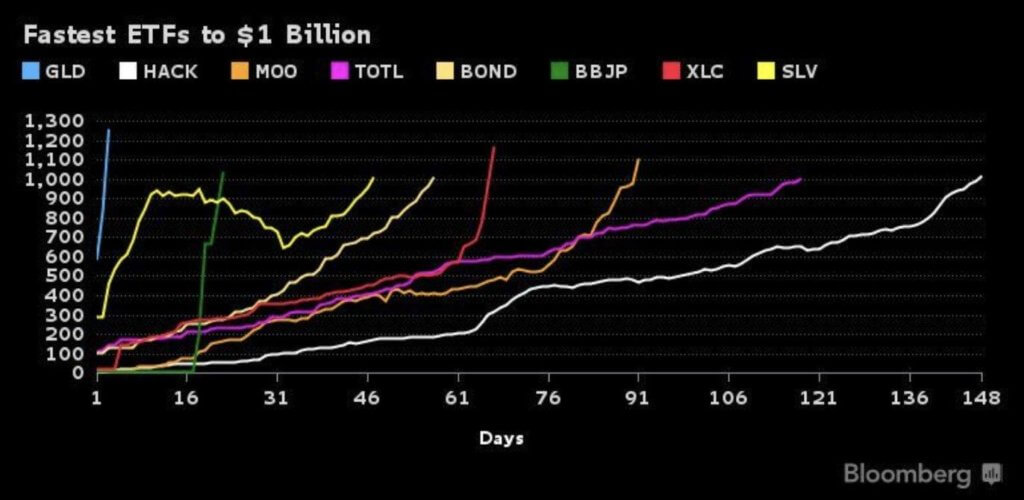
Last week marked a seminal moment in the cryptocurrency space as the first Bitcoin ETF began trading under the symbol BITO. After eight years and numerous failed attempts to launch a cryptocurrency-ETF, the SEC finally approved one. The new fund quickly amassed several billion in assets and is considered by many industry experts as an instant success. The last fund to replicate this type of asset gathering was the SPDR Gold Trust or GLD¹. Below is a chart showing some other popular ETF’s and the time it took to reach the $1B mark.
Now that this product is available to the masses, many investors are questioning whether to add this to portfolios and how much they should allocate towards it.
The second part is the easiest to answer, as any investment into crypto, even into the most dominant and established player, should be viewed through the lens of speculation. I wouldn’t dissuade anyone from participating, but it must be sized appropriately and kept in the context of the long-term financial goals of saving/working/investing. The last thing anyone wants is to derail these long-term goals with an over-allocation and then watch the price collapse, which has been known to happen frequently.
Now whether investors should consider this particular fund, I would remind them when you are sitting at the poker table, you need to know the value of the cards you are holding. At first glance, many investors might believe that the fund owns and retains ownership of Bitcoins stored in a private wallet controlled by the fund. In reality, this fund “tracks” the price of Bitcoin and doesn’t own any on behalf of its investors. The summary below is taken directly from the website.

Note in the above description that the fund uses futures contracts and lets investors know to expect differences between the price of the fund and the actual price of Bitcoin. A glaring issue is cryptocurrencies never sleep and trade 24/7, 365, unlike the ETF, which keeps to the standard market hours of 9:30 AM-4:00 PM Monday through Friday. This fund would appear to be another case of clever marketing by Wall Street to entice would-be investors. Whether investors don’t want to fool around with setting up their private wallets or are intimidated by the entire crypto market, this gives a convenient outlet to participate. For the pleasure of owning no actual Bitcoins, the fund charges 95 bps annually.
At some point, more products may be introduced that give a better option for owning cryptocurrency, but investors should think about taking a page from Kenny Rogers and know when to walk away or know when to run.
Nathan Smith is a Portfolio Manager with Rather & Kittrell.
¹https://www.kiplinger.com/investing/etfs/603621/proshares-bitcoin-strategy-etf-bito