Articles
Fed Cuts Interest Rates: What It Means for Markets, Borrowing, and Investors
09.30.2024
The Federal Reserve recently voted to cut interest rates, shaving 0.5% off the benchmark .1
Markets rallied exuberantly at the news, reaching new highs.2
Why did the Federal Reserve cut rates?
With inflation on a strong downward trajectory and concerns about economic weakness rising, the Fed clearly decided now was the right time to cut.
The size of the cut was a surprise to many, who expected a quarter-point cut and could indicate that the Fed feels strong action is warranted.
Some analysts believe lowering interest rates will lower the risk of a recession and increase the odds of a “soft landing” for the economy.3
What do lower rates mean?
The Fed is responsible for setting the benchmark interest rate that all other borrowing rates follow.
A lower benchmark will reduce borrowing costs for businesses and consumers, helping economic growth accelerate in the months to come.
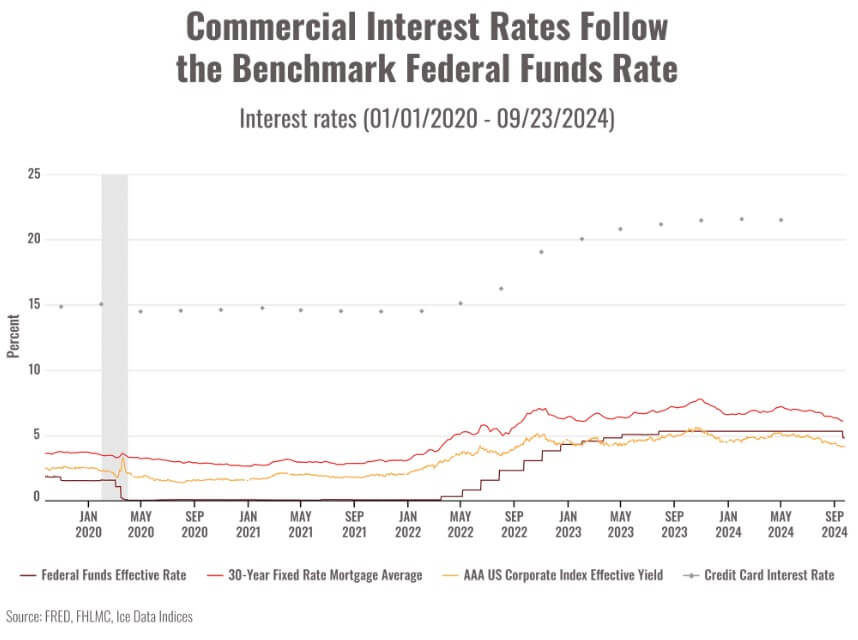
The chart above shows interest rate trends over the last four years.
You can see that while commercial rates don’t change immediately after a rate cut, they generally follow the same trend.
Going forward, mortgages will become cheaper, likely boosting the real estate market.
Business borrowing costs will drop, giving a bump to industries like technology, which rely on credit to fund R&D.
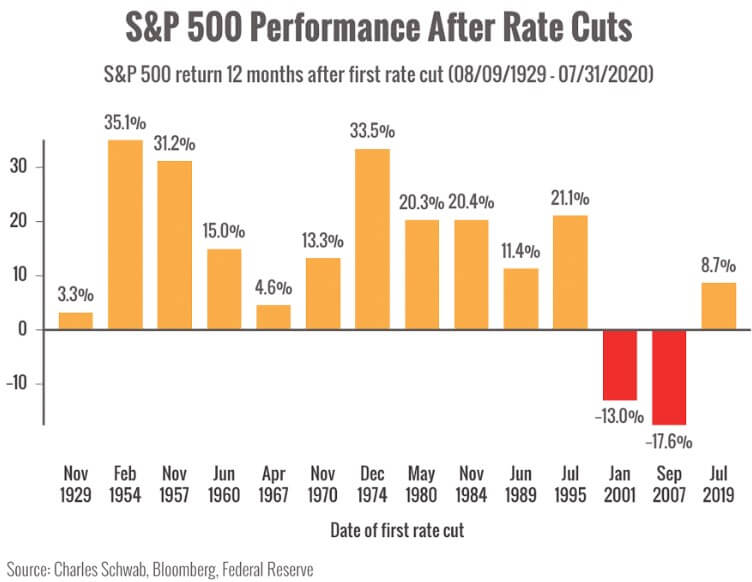
Historically, stocks have tended to do well when rates drop.4
However, past performance doesn’t predict the future and there’s no guarantee that equities will follow any conventional path.
Today’s volatile markets are still grappling with post-pandemic distortions and are dominated by high-flying tech stocks.
|
|