Articles
What the End of the Penny Can Teach Us About Wealth Planning
06.06.2025
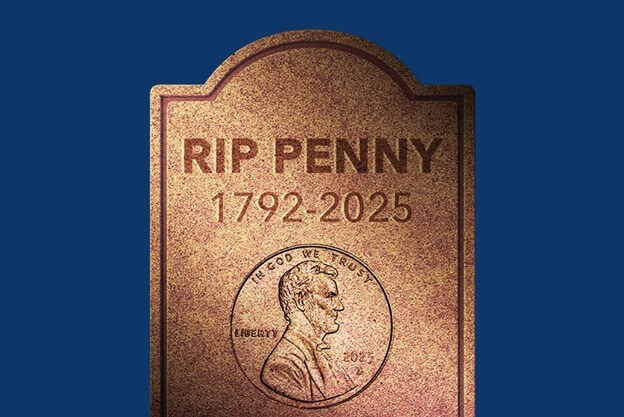
The U.S. Treasury has officially started the process to end production of the penny. The last ones to ever be made are in production now, with no new ones entering circulation after the beginning of next year.
This seems like a big change in the financial world since the penny has been around since the 1700’s and questions remain, such as whether cash purchases will be rounded up or down when they are gone.
My family was one that always saved our pennies. We had a big antique glass jug that my parents, siblings, and I would throw pennies in for years when I was growing up.
I remember dreaming of getting it filled to the top. We could take those small copper and zinc pieces to the bank and exchange them for a large chunk of cash that we could use to take a big family vacation or possibly even buy a car.
After nearly a decade of diligent savings, the jug slowly filled to the point it could not be lifted. The coins had to be divided into several buckets, and one especially unlucky bank teller got to spend much of her workday helping us count it.
When all was said and done, it was not quite enough to buy a new car. Our years of diligent saving had accrued us $144.
Most financial writing tells us to save and mind our pennies because they add up. While this is true, I am not sure the amount of time we spent saving and thinking about the pennies mattered at all. I could have mowed a few yards and earned that money in one weekend.
In wealth planning, too many people focus on the financial equivalent of saving pennies—clipping coupons, obsessing over small daily expenses, or trying to time the market by a few cents. Those things can feel productive, but they rarely move the needle.
Instead, focusing on what the big decisions are is where real financial progress happens. A few examples include:
1. Having a long-term plan.Knowing where you’re headed and building a strategy around your goals is worth far more than any budgeting trick. Without a plan, it’s easy to focus on tactics that feel urgent but don’t connect to anything larger. 2. Managing taxes efficiently.Thoughtful tax planning can have an enormous impact on preserving and building wealth. It’s not about squeezing every last deduction. It’s about structuring your income, investments, and distributions in a way that fits your broader strategy. 3. Investing with discipline.Trying to buy at the bottom and sell at the top rarely works. Instead, a clear investment process that stays aligned with your goals through up and down markets is a better approach—and more sustainable. 4. Protecting your estate.It’s not just about money—it’s about making sure your family is protected, and your wishes are followed. 5. Delegating to the right team.You don’t have to handle every piece on your own. In fact, many clients come to us because they’ve realized they want to spend their time living—not sorting through spreadsheets or researching the latest tax law. The penny disappearing is a reminder that not everything is worth our attention. When we try to focus on every little detail, we often can miss the bigger picture. Good financial planning means knowing where to look and focusing on what matters most. I am grateful for the thrift and patience I learned through saving pennies, but I don’t keep them anymore. They now serve as a reminder to work through the big things and let the rest go. For that, I am thankful to have had the penny. |
|

Chase Kerby, CFP®, AIF® is a Senior Advisor with Rather & Kittrell.